

Last updated: April 2026 | Reading time: 8 minutes
"Won't it get stuffy in there?" It's the question we hear most often from people considering office pods. And it's a fair concern - the idea of sitting in an enclosed box for hours doesn't sound appealing if the air becomes stale and uncomfortable.
The good news? Modern office pods have sophisticated ventilation systems that maintain fresh, comfortable air quality throughout the working day. In this guide, we'll explain how pod ventilation works and what to look for when making your purchase decision.
Why Ventilation Matters More Than You Think
Ventilation in office pods isn't just about comfort - it directly impacts health, cognitive performance, and productivity.
The CO2 Connection
When we breathe, we exhale carbon dioxide (CO2). In an enclosed space without adequate ventilation, CO2 levels rise quickly. Research from Harvard's T.H. Chan School of Public Health found that cognitive performance drops significantly as CO2 levels increase:
| CO2 Level (ppm) | Environment | Cognitive Impact |
|---|---|---|
| 400-600 | Fresh outdoor air | Optimal performance |
| 600-1000 | Well-ventilated office | Normal performance |
| 1000-1500 | Poorly ventilated space | 15% reduction in cognitive scores |
| 1500-2500 | Stuffy room | 50% reduction in cognitive scores |
A single person in an unventilated 2m³ space can push CO2 levels above 2500ppm within 30 minutes. That's why proper ventilation isn't optional - it's essential.
Comfort and Concentration
Beyond CO2, poor ventilation leads to:
- •Temperature build-up from body heat and electronics
- •Humidity increase from breathing
- •Stale, unpleasant air that's distracting
- •Fatigue and headaches reducing productivity
Nobody does their best work feeling uncomfortable. Good ventilation keeps you fresh and focused.
How Pod Ventilation Systems Work
Office pods use two main approaches to ventilation: active and passive systems. Most quality pods combine both.
Active Ventilation (Mechanical)
Active systems use fans to force air circulation. Fresh air is drawn in, typically through the base or sides, while stale air is expelled through vents near the ceiling (hot air rises, making top-mounted exhaust efficient).
Advantages:
- •Consistent, reliable airflow
- •Can achieve high air exchange rates
- •Works regardless of external conditions
- •Often includes filtration
Considerations:
- •Fan noise (quality varies significantly)
- •Power consumption
- •Moving parts require maintenance
Passive Ventilation (Natural)
Passive systems rely on natural air movement through strategically placed vents. Temperature differences between inside and outside the pod create airflow without mechanical assistance.
Advantages:
- •Silent operation
- •No power required
- •No moving parts to maintain
- •Lower cost
Considerations:
- •Less consistent airflow
- •May be insufficient for extended use
- •Dependent on temperature differential
- •Can compromise acoustic performance if vents are too large
The Best of Both Worlds
Premium pods like the Frem Oasis Atmos range combine mechanical ventilation with acoustic engineering. Their "acoustic labyrinth" design routes air through sound-absorbing channels, achieving high airflow rates while maintaining excellent acoustic performance.
Explore the Frem Oasis Atmos range →
Air Exchange Rates Explained
When comparing pods, you'll encounter specifications like "136.8 m³/h" or "78.7 air changes per hour." What do these numbers actually mean?
Volume Flow Rate (m³/h or l/s)
This measures how much air moves through the pod per hour (cubic metres) or per second (litres). Higher numbers mean more fresh air.
Recommended minimums:
- •1-person pod: 25-30 l/s (90-108 m³/h)
- •2-person pod: 50-60 l/s (180-216 m³/h)
- •4-person pod: 100-120 l/s (360-432 m³/h)
For context, the Frem Oasis Atmos Phone Booth achieves 38 l/s (136.8 m³/h) - comfortably exceeding the recommended minimum for a single-person space.
Air Changes Per Hour (ACH)
This tells you how many times the entire air volume inside the pod is replaced each hour. It's calculated by dividing airflow volume by pod interior volume.
What the numbers mean:
- •10-20 ACH: Basic ventilation
- •30-50 ACH: Good ventilation
- •50-80 ACH: Excellent ventilation
- •80+ ACH: Premium ventilation
The Frem Oasis Atmos Phone Booth achieves 78.7 air changes per hour - meaning the air inside is completely refreshed every 45 seconds. At this rate, CO2 never has chance to build up.
Real-World Performance
Laboratory specifications don't always match real-world performance. Factors affecting actual ventilation include:
- •Installation clearance - Most pods need 150-200mm gap above for proper airflow
- •Room temperature - Very warm offices may reduce passive airflow
- •Maintenance - Blocked filters reduce performance
- •Usage patterns - Multiple people or hot equipment increase demands
What to Look For When Buying
Fan Noise Levels
The ventilation system shouldn't create the noise problem it's solving. Look for:
- •Specified noise levels in decibels (dB)
- •Variable speed fans allowing adjustment based on needs
- •User reviews mentioning fan noise
Quality pods achieve near-silent operation (under 35dB). Budget options may have noticeably audible fans that become irritating over time.
Adjustability
Different users have different preferences. Useful controls include:
- •Fan speed adjustment (low/medium/high or variable)
- •Airflow direction options
- •Temperature feedback in premium models
Filtration
Some pods include air filtration, removing dust, allergens, and pollutants. This is particularly valuable in:
- •Urban offices with poor outdoor air quality
- •Buildings with ageing HVAC systems
- •Spaces where users have allergies
Ask whether filters are included and what replacement involves.
Clearance Requirements
Most pods need space above them for air circulation. Check the specification for:
- •Minimum ceiling clearance (typically 150-250mm)
- •Side clearances if applicable
- •Placement restrictions (away from walls, etc.)
Installing a pod without adequate clearance will compromise ventilation performance regardless of the system's capabilities.
Maintenance Requirements
Ventilation systems need occasional attention to maintain performance.
Filter Maintenance
If your pod has filters:
- •Check monthly for visible dust build-up
- •Replace according to manufacturer schedule (typically 6-12 months)
- •Keep spares in stock to avoid delays
Clogged filters reduce airflow, increase fan noise, and can cause overheating.
Fan Maintenance
Mechanical fans may need:
- •Periodic cleaning if accessible
- •Bearing lubrication on some models (rare with modern sealed bearings)
- •Motor replacement after several years (typically 5-10 year lifespan)
Most quality pods require minimal fan maintenance under normal use.
Vent Cleaning
Both intake and exhaust vents can accumulate dust:
- •Vacuum or wipe monthly as part of pod cleaning
- •Check for obstructions that might block airflow
- •Ensure vents aren't covered by papers, bags, or other items
Addressing the "Stuffy Pod" Concern
Let's tackle the elephant in the room: some people have experienced stuffy, uncomfortable pods. Why does this happen?
Common Causes
1. Poor quality pods Budget pods may have inadequate ventilation systems. The saving isn't worth the discomfort.
2. Incorrect installation Pods installed too close to ceilings or walls can't circulate air properly.
3. Neglected maintenance Blocked filters and dusty vents reduce airflow over time.
4. Overloading Using a 2-person pod for 4-person meetings will overwhelm any ventilation system.
5. Extended sessions without breaks Even well-ventilated pods benefit from opening the door periodically during very long sessions.
How to Avoid Problems
- •Choose quality pods with documented ventilation specifications
- •Verify installation requirements are met
- •Schedule regular maintenance
- •Match pod capacity to actual use
- •Take occasional breaks during extended sessions
The Temperature Factor
Some "stuffiness" complaints are actually about temperature rather than air quality. Body heat and laptop heat accumulate in small spaces. Solutions include:
- •Active cooling (available on premium pods)
- •Lower fan settings don't always help - moving more air can feel cooler
- •Strategic pod placement away from sunny windows and heat sources
Questions to Ask Before Buying
Use this checklist when evaluating pods:
- • What is the air exchange rate (m³/h or ACH)?
- • What is the fan noise level in decibels?
- • Can fan speed be adjusted?
- • Does it include air filtration?
- • What ceiling clearance is required?
- • What maintenance is needed and how often?
- • Can I test the pod before purchasing?
Making Ventilation Work for You
Proper ventilation transforms office pods from potential sweatboxes into comfortable, productive spaces. The technology exists to maintain fresh, healthy air quality throughout the working day - you just need to choose pods that implement it properly.
When evaluating options, don't compromise on ventilation. A pod with excellent acoustics but poor airflow will quickly become unused. Look for documented specifications, independent testing where available, and realistic air exchange rates for your use case.
Your comfort - and your cognitive performance - depend on it.
Need Advice on Pod Ventilation?
Not sure which pods offer the ventilation performance you need? Our team can help you evaluate options and find the right solution for your workspace.
Need Help Choosing the Right Office Pod?
Our team has helped hundreds of UK businesses find the perfect workspace solutions. Get free, impartial advice tailored to your needs.
Related Articles

Employee Retention is Built on Autonomy
When companies talk about retention, the conversation usually turns to salary or perks. The strongest predictor is something far less visible: autonomy. Part 5 of our Focus-First Workplace series.
Read more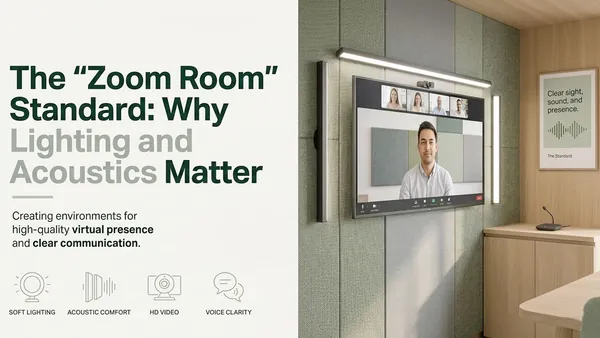
The "Zoom Room" Standard: Why Lighting and Acoustics Matter
Today's modern workplace isn't just a physical environment — it's a broadcast environment. Part 4 of our Focus-First Workplace series on why lighting, acoustics and purpose-built video spaces are now business-critical.
Read more